

| Q3 • 2026 |
TMGNorthwest
MARKET PULSE
MARKET ANALYSIS A Snapshot of the Local Single Family Housing Market
Third-quarter results across SW Washington, Portland, and the Tri-Cities reflect a more competitive rental environment following the peak summer leasing season. Average rents increased in SW Washington and Portland but remained relatively flat in the Tri-Cities. Days on market increased across all three regions, indicating slower leasing activity and continued renter price sensitivity. Competitive pricing, property condition, and effective marketing remain essential to attracting qualified residents.
The high cost of homeownership continues to support family rental demand. Elevated home prices, mortgage payments, insurance, and maintenance expenses make purchasing difficult for many households. Single family rentals remain attractive to residents seeking additional space, private yards, garages, and established neighborhoods without the financial commitment of homeownership.
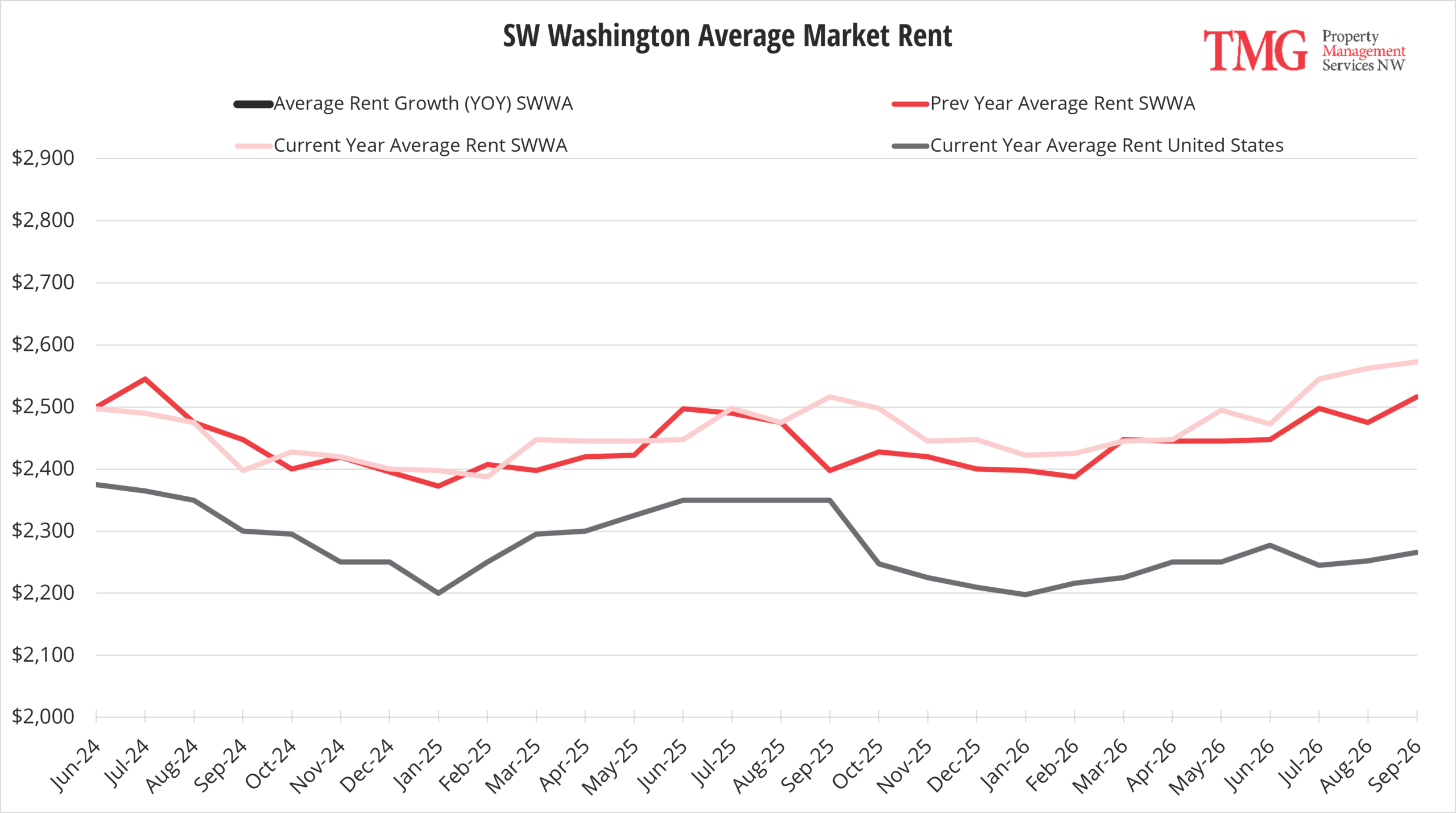
SW Washington continues to demonstrate stability, with average rent increasing $100 to $2,573. Average days on market rose from 44 to 49 days, indicating a modest leasing slowdown. Average tenancy remained strong at 3.6 years, the longest of the three markets, while delinquency held steady at 0.54%. These figures suggest continued opportunities for measured rent growth, supported by strong resident retention.
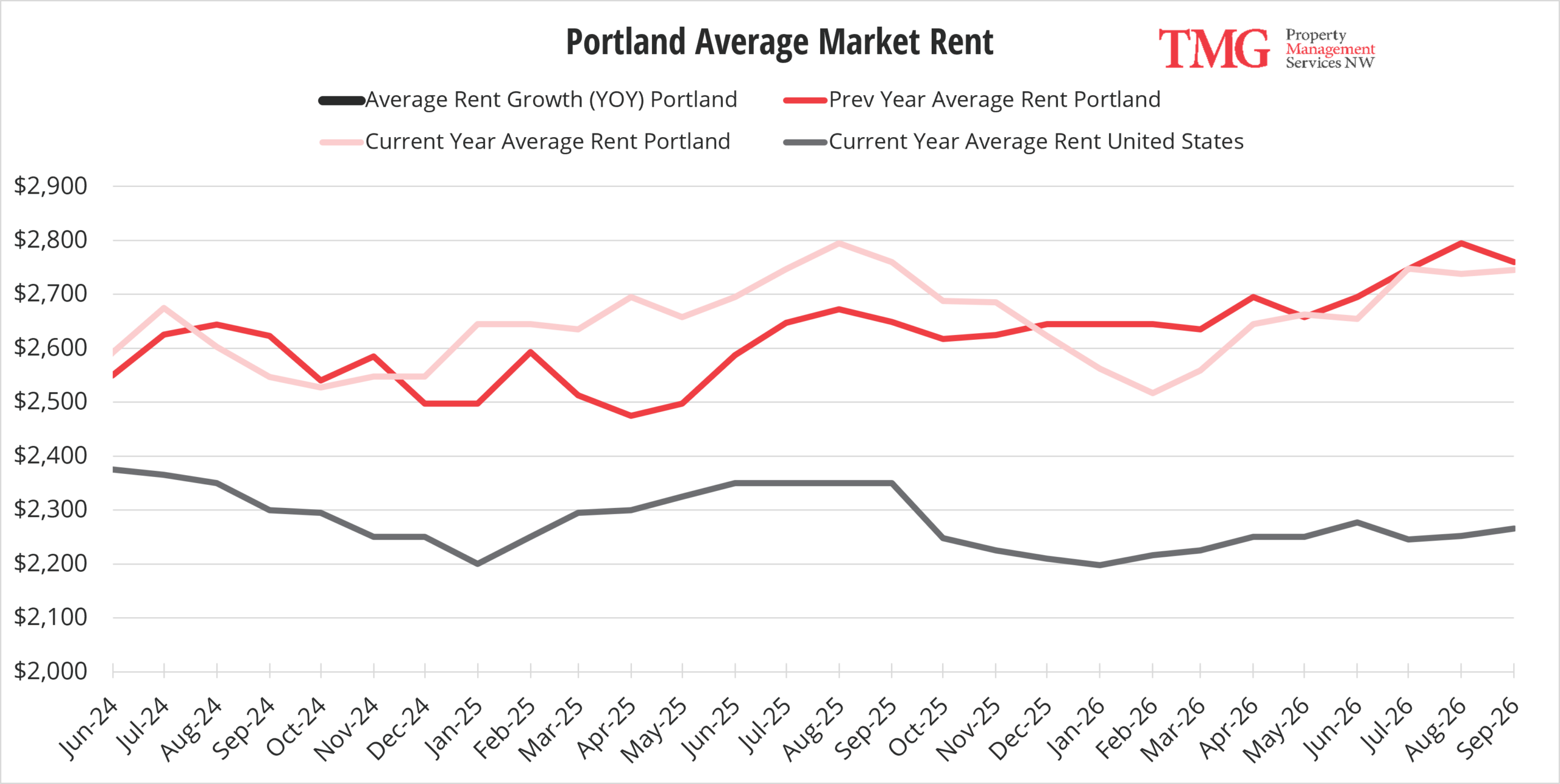
Portland maintained the highest average rents, increasing $80 to $2,745. However, average days on market climbed from 48.5 to 57.5 days, representing the largest leasing slowdown among the three regions. Average tenancy declined slightly to 3.4 years, while delinquency increased to 0.92%. These trends highlight continued affordability concerns and competition, reinforcing the importance of appropriate pricing and proactive resident retention.
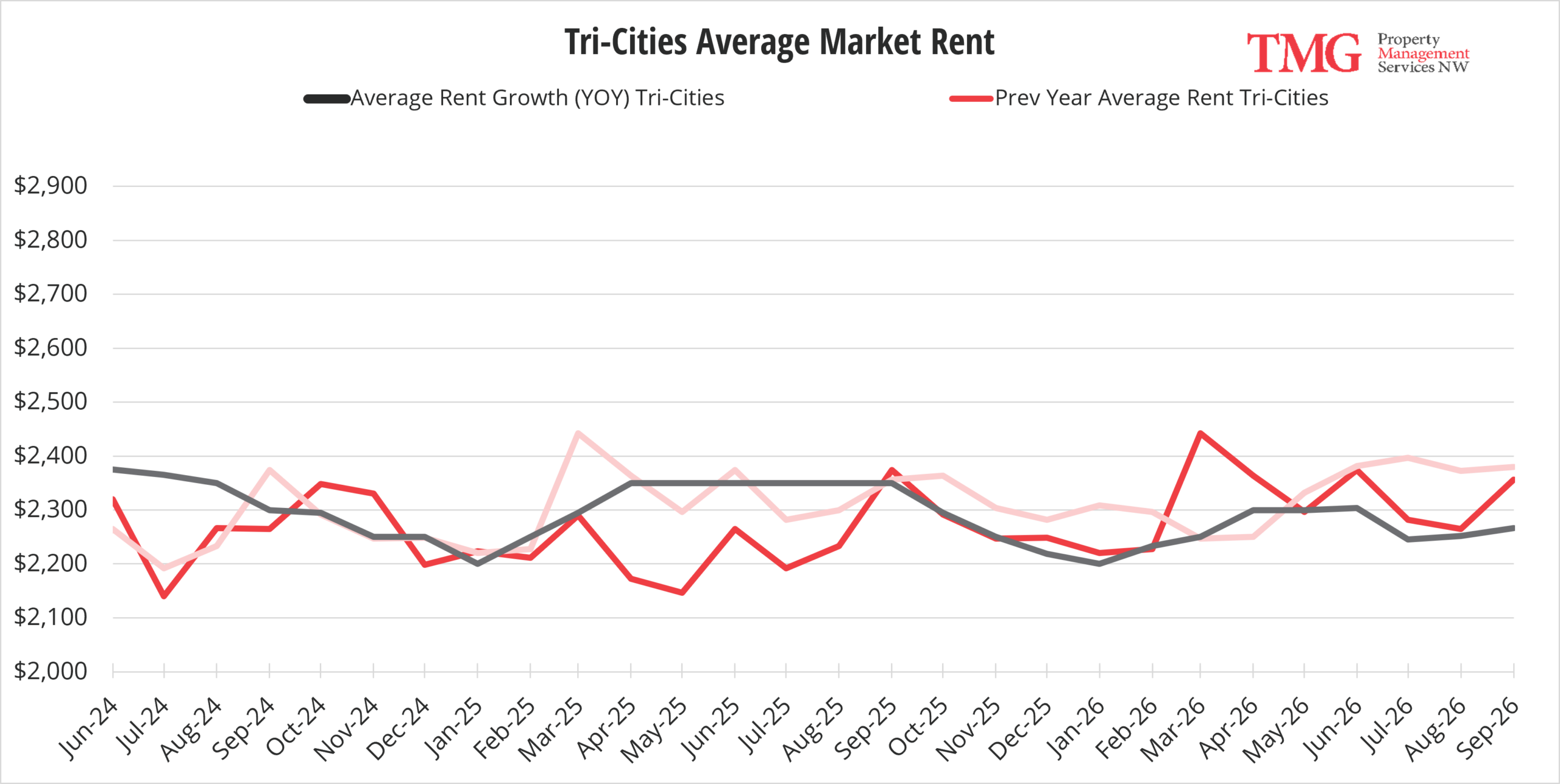
The Tri-Cities experienced relatively flat rent growth, with average rent holding at $2,380. Average days on market increased from 42 to 51 days, reflecting slower leasing activity following a strong second quarter. Average tenancy increased slightly to 2.2 years, while delinquency fell to 0%. Competition from newer housing continues to challenge older properties, making competitive pricing and desirable property features increasingly important.
Across all three markets, longer leasing periods reinforce the need for realistic rent expectations. Competitive pricing, proactive maintenance, early marketing, and resident retention remain key strategies for minimizing vacancies and protecting long-term rental income.
SW WASHINGTON Rental Market
| Average Market Rent | |||
|---|---|---|---|
| $2,573 | 49 | 3.6 | .54% |
PORTLAND Rental Market
| Average Market Rent | |||
|---|---|---|---|
| $2,745 | 57.5 | 3.4 | .92% |
TRI-CITIES Rental Market
| Average Market Rent | |||
|---|---|---|---|
| $2,380 | 51 | 2.2 | 0% |
STRATEGIC TAKEAWAYS Southwest Washington
Portland
Tri-Cities
KEY TOPIC
NEW CAPS, NEW CLAUSES
Decoding the Latest Rental Laws in Washington and Oregon
At TMG, we know the strongest leasing results in the summer market usually begin well before summer arrives. Q1 is the time to evaluate property condition, address deferred maintenance, and position homes to enter the market with momentum when leasing activity increases.
As seasonal demand builds, homes that are clean, well-maintained, and market-ready tend to lease faster and generate stronger interest. Delays in repairs, turnover planning, or property preparation can shorten the window to capture peak market rents and increase the risk of unnecessary vacancy.
- Washington's Framework (House Bill 1217): Effective since mid-2025, this rent stabilization law caps combined rent and fee increases at 9.683%.
- Oregon's Metric (ORS 90.323): Oregon operates under a 9.5% allowable increase cap. Looking ahead, state offices have already announced that the maximum allowable increase will rise to a flat 10%.
Crucially, neither state allows any rent increases during the first 12 months of a tenancy. Furthermore, exemptions differ significantly: Washington exempts newer properties under 12 years old and certain owner-occupied spaces, while Oregon enforces a strict 15-year rolling exemption for new construction with no general small-landlord carveout.
Beyond the pricing math, recent legislative sessions have introduced critical updates to daily property management operations:
1. Administrative Relief for Notices (Washington HB 2664): In a massive win for landlord logistics, Washington lawmakers passed a long-awaited fix that eliminates expensive, burdensome certified mail requirements for unlawful detainer and rental notices. Owners can now utilize standard, first class U.S. mail for substitute service, eliminating the massive delays caused when tenants routinely refused to sign for certified letters at the post office.
2. The Portable Cooling Mandate (Washington ESSB 6200): Landlords in Washington can no longer issue blanket bans or charge additional fees for tenant-installed portable cooling devices, such as window ACs or floor standing heat pumps. While owners retain the right to restrict units based on legitimate safety concerns—such as electrical capacity limits, code violations, or blocked egress windows—the baseline law shifts the right to safe cooling heavily toward the renter. Oregon maintains a similarly strict standard protecting tenant access to functional cooling.
The Bottom Line: Operating in the Pacific Northwest means abandoning old “mom-and-pop” assumptions. With cross-state rental markets favoring long term retention over active turnover, compliance is paramount. Balancing the overlapping rules of the Portland and Seattle metro corridors requires meticulous legal precision to ensure your portfolio remains profitable and legally sound.
WHY THIS MATTERS TO YOU
CONTACT US TODAY!


All data in this report is pulled from TMG single family rental statistics and Zillow Rental Manager Market Trends.